*a few of the links in this post are affiliate links. That means if you click and order something, I’ll make a few pennies.
What does a day in my life look like? Most days are pretty similar. Some days I have more energy than others or get more ambitious than on other days.
Rather than lay out a whole day of what I’ve done on a particular day, I’ll instead give a glimpse into random activities I do.
In my ‘homestead wife ness’, I’m still making kombucha and kefir regularly. I have made fermented vegetables. I’ve pickled red onion and radish seed pods. And I’ve made sourdough.
Kefir is a daily or every other day task, but is quite simple.
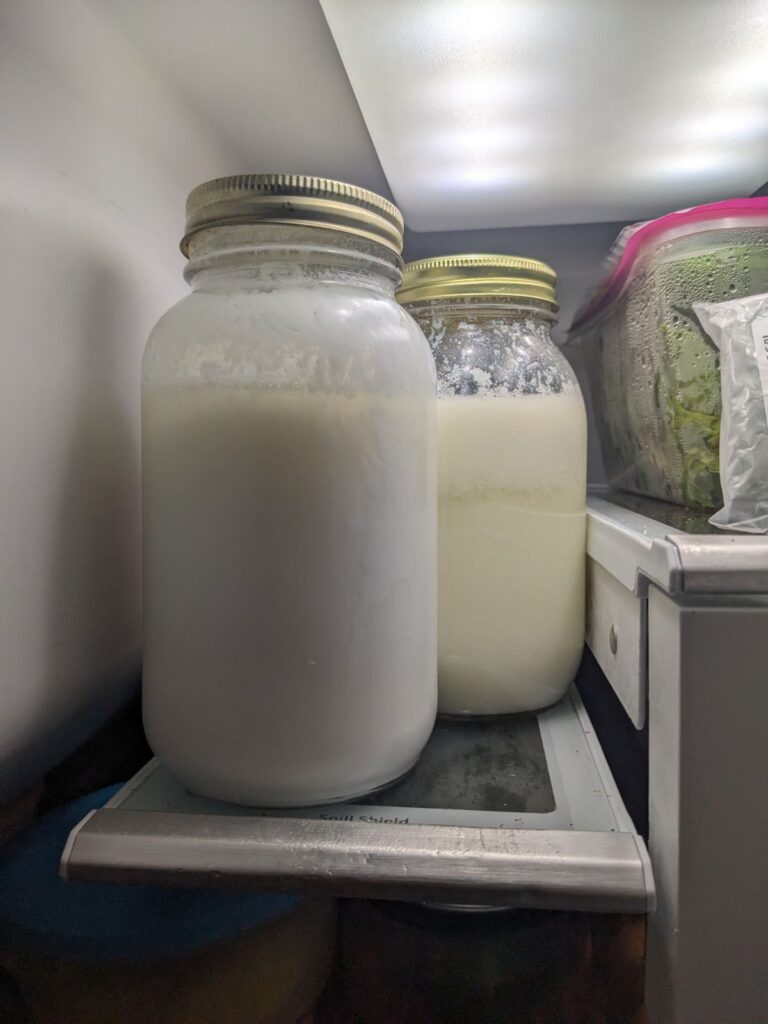
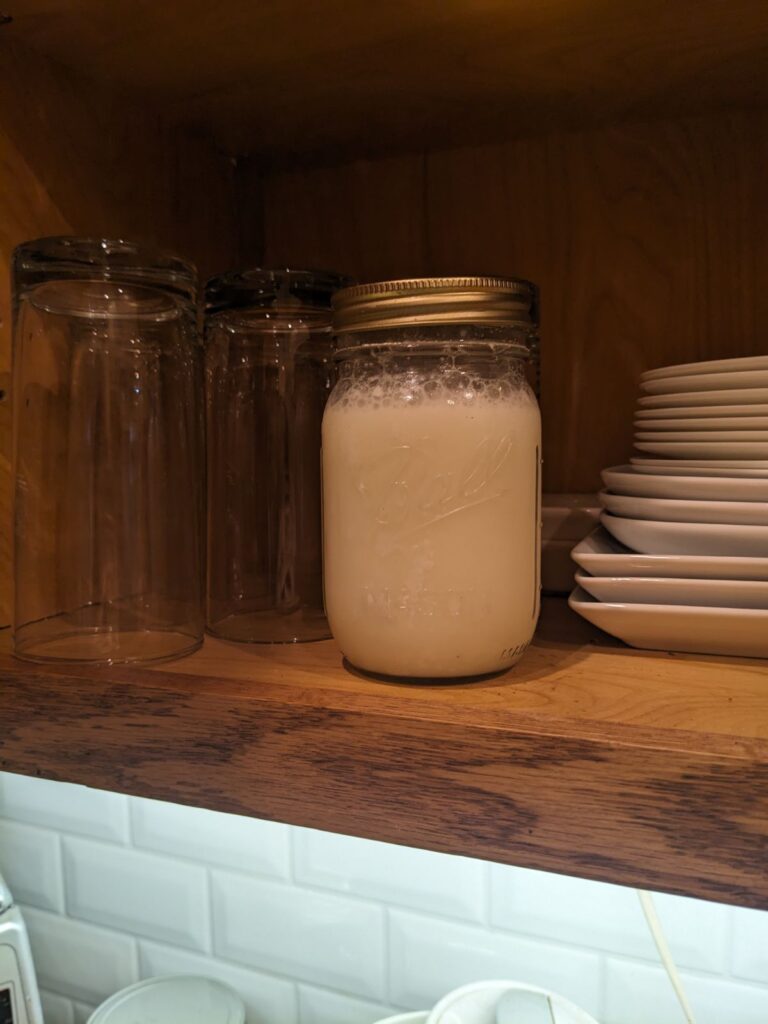
What is kefir you ask? It’s fermented milk. Before you wonder what has gotten into me and why I would drink bad milk, let me tell you! It’s NOT bad milk, its fermented. I have ‘grains’ that I put into milk, let it sit (unrefrigerated) for about 24 hours (sometimes longer if I forget about it) and then I strain the kefir into a new jar and put the ‘grains’ back into the original jar and add more milk to start the process over again. (‘Grains’ look like tapioca beads)
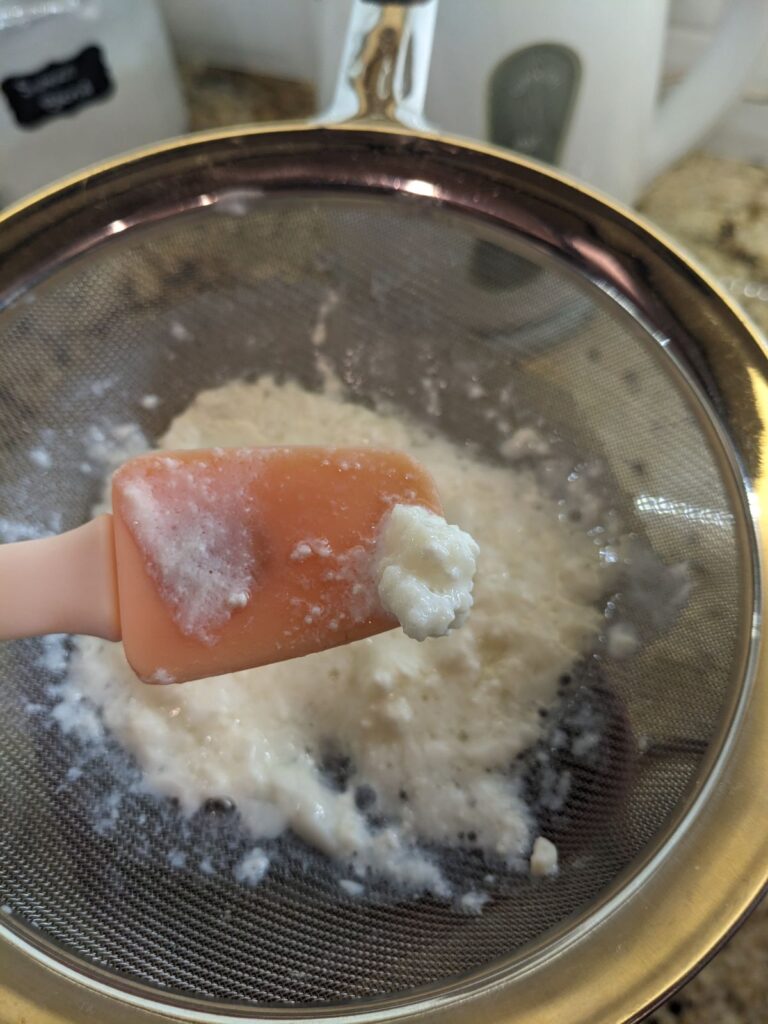
The grains will ‘eat’ the lactose in the milk leaving behind really good-for-you bacteria that is amazing for your gut! I’ve read that people who can’t do dairy CAN do Kefir because once the bacteria have done their thing, the part that constitutes a ‘dairy product’ has been eaten and it no longer there to cause issues.
It tastes like drinkable yogurt. I like drinking it cold which is why I refrigerate the strained kefir. I add a splash of vanilla and a 1/36th tsp (doonk) of pure stevia powder – drinkable vanilla yogurt.
Looking for a really good, cheap probiotic? KEFIR – find some grains and use store bought (NOT ultra-pasteurized) milk.
Kombucha is also an ongoing adventure. What is kombucha, you ask? It’s fermented tea! (sensing a theme, maybe?) You can start from scratch, but I’ve always either bought or gotten a SCOBY (Symbiotic Culture of Bacteria & Yeast) to get things started. I brew 2 cups of tea with 1 cup of sugar (basically make a sweet tea), then after it cools to room temp, I add that to the SCOBY and about a cup of tea from the last batch and then add enough water to have a gallon of tea.
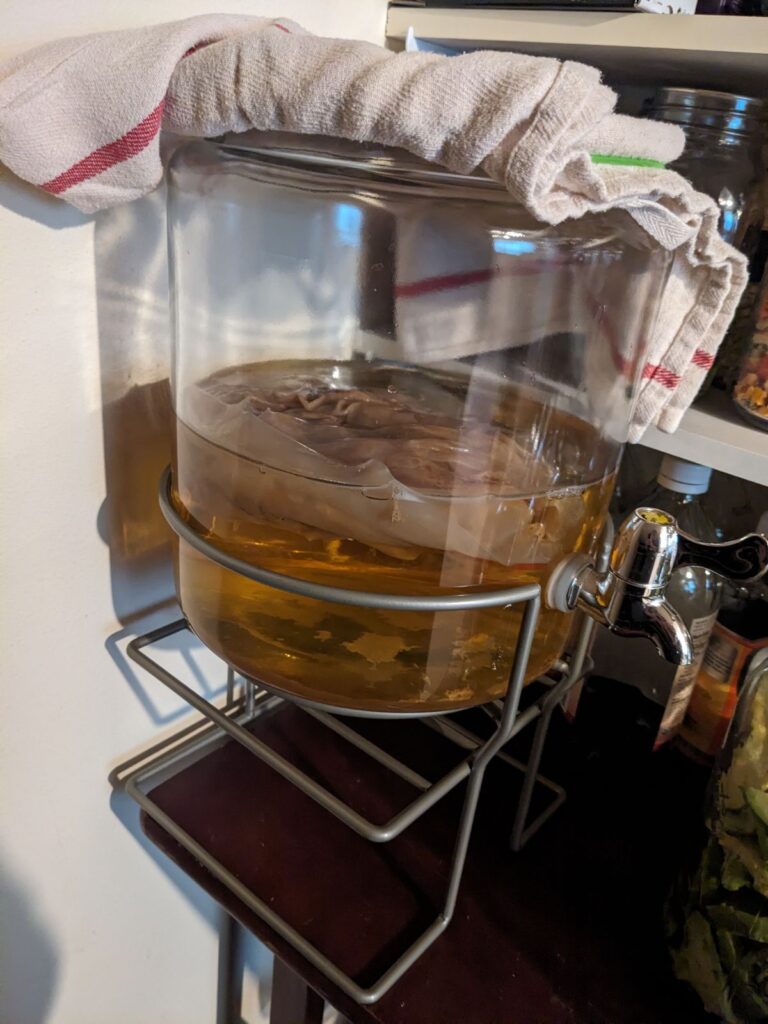
That tea then sits in a dark closet for at least 2 weeks (usually longer) while the SCOBY eats the sugar. After about 2 weeks, I taste it to see if its ready. I don’t have an exact science for it, but I can tell by taste when it gets to where I want it. When it’s ready to bottle, it has a slight effervescence (light a light champagne) with just a hint of sweetness. If it has a vinegar taste, I’ve let it go too long, but I actually still like it a bit tart, so it doesn’t go to waste. I have yet to try much with second fermenting to get flavors added, but that is the next step.
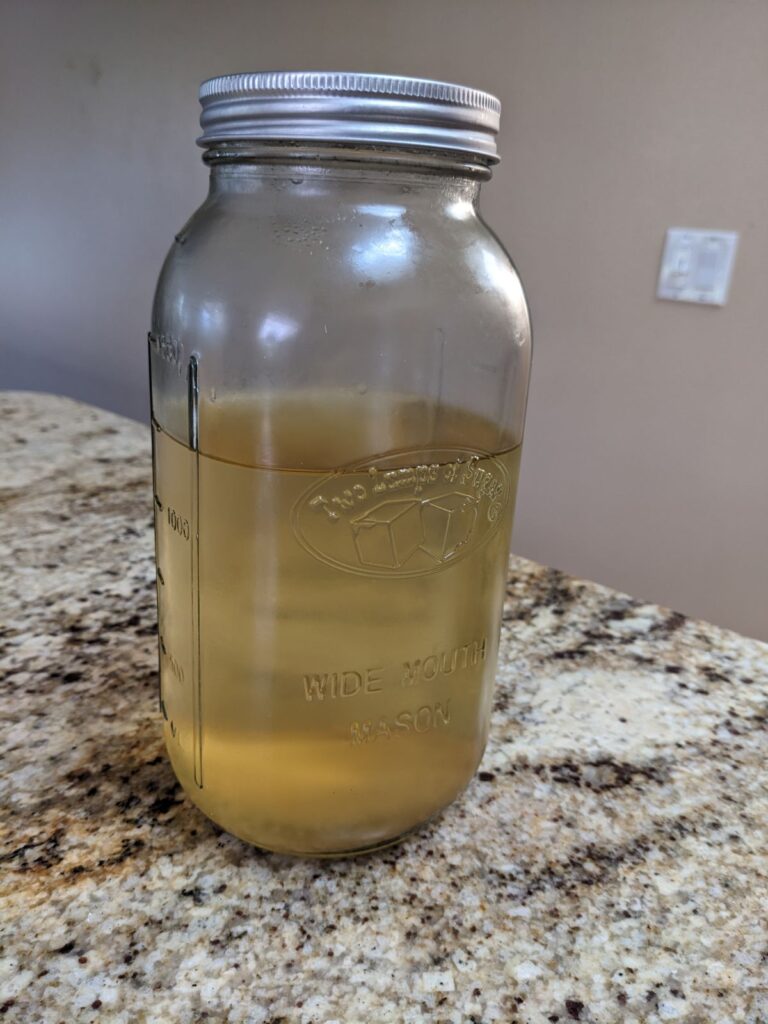
Again, looking for a cheap, healthy probiotic – KOMBUCHA! It’s the cost of 2 Tbsp of loose tea and a cup of sugar.
For the fermented vegetables, I used a recipe I received for signing up for a THM coach website (A Joyful Life with KJ). I’ll admit these took several times of eating to actually enjoy them. But I really DO like them! They’re a big mix of vegetables that I put in half gallon mason jars and use fermenting lids* with weights to ferment for a couple of weeks before they were ready.
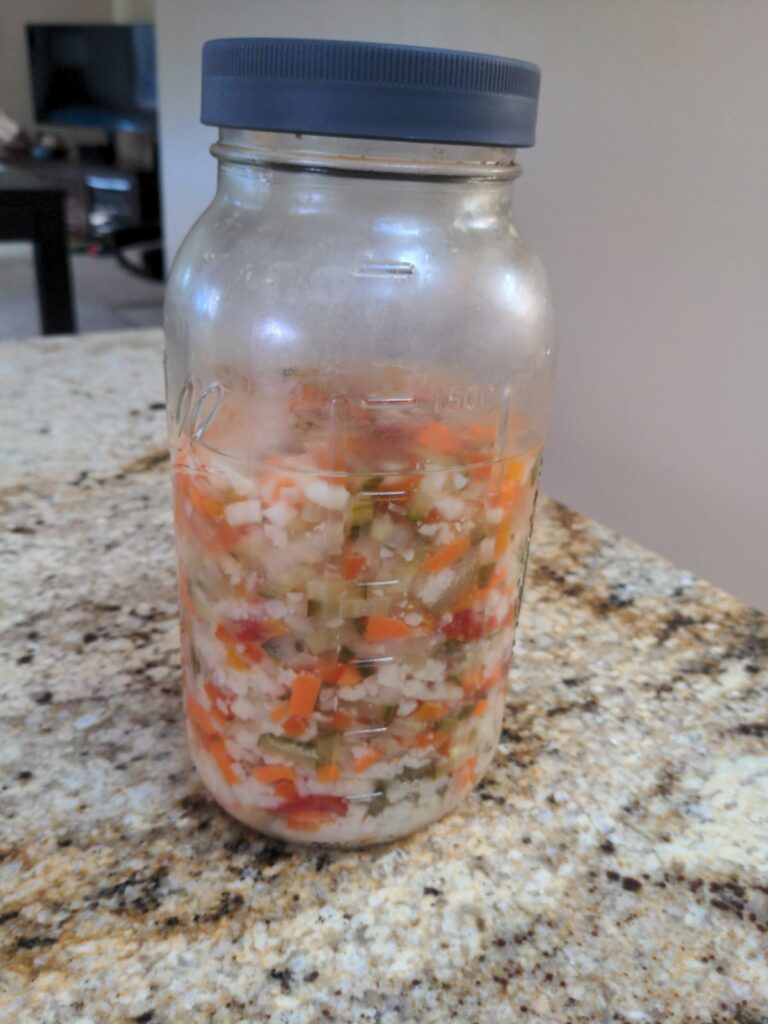
Again, really good for you, yummy healthy probiotic – FERMENTED VEGETABLES!!!
Did you sense a theme here? The more I learn about health and my own personal health, the more I hear about the importance of a healthy gut. Good, fermented foods are essential to help introduce good bacteria to your body. The standard American diet with ultra-processed foods has us lacking good bacteria and teeming with bad bacteria which causes all kinds of havoc. If you have some gut issues (or even some you wouldn’t associate with your gut), give some good, fermented food a try and see what that does for your health!
If you want to learn more, take a look at Donna Schwenk’s books:
Cultured Food for Life*
Cultured Food in a Jar* (or via Kindle*)